 how-to
How to Find Authentic Thin Crust Pizza
Table of Contents
- What Defines Authentic Thin Crust Pizza
- Thin-Crust Pizza Styles and Regional Variations
- How to Spot Authentic Thin Crust Before You Order
- Evaluating Crust Quality: Crispness, Crunch, and Chew
- Thin-Crust Pizza Toppings That Work Best
- Reading Thin-Crust Pizza Reviews to Find Local Options
- Your Checklist for Ordering Authentic Thin Crust Pizza
- Frequently Asked Questions
Last Updated: October 21, 2026
What Defines Authentic Thin Crust Pizza
Authentic thin crust pizza is a style built on simplicity and technique. The crust is rolled or stretched thin, typically a quarter-inch to three-eighths of an inch thick, and baked at high heat until it achieves a crispy exterior while maintaining some chew inside.
At Breckenridge Ale House, we serve 24-inch Jersey-style thin-crust pizzas that embody this tradition. The difference between authentic thin crust and other styles comes down to execution. When you bite into real thin-crust pizza, you feel the snap. The crust doesn't flop.
The hallmarks of real thin-crust pizza
Real thin-crust pizza has specific characteristics you can identify before you even taste it:
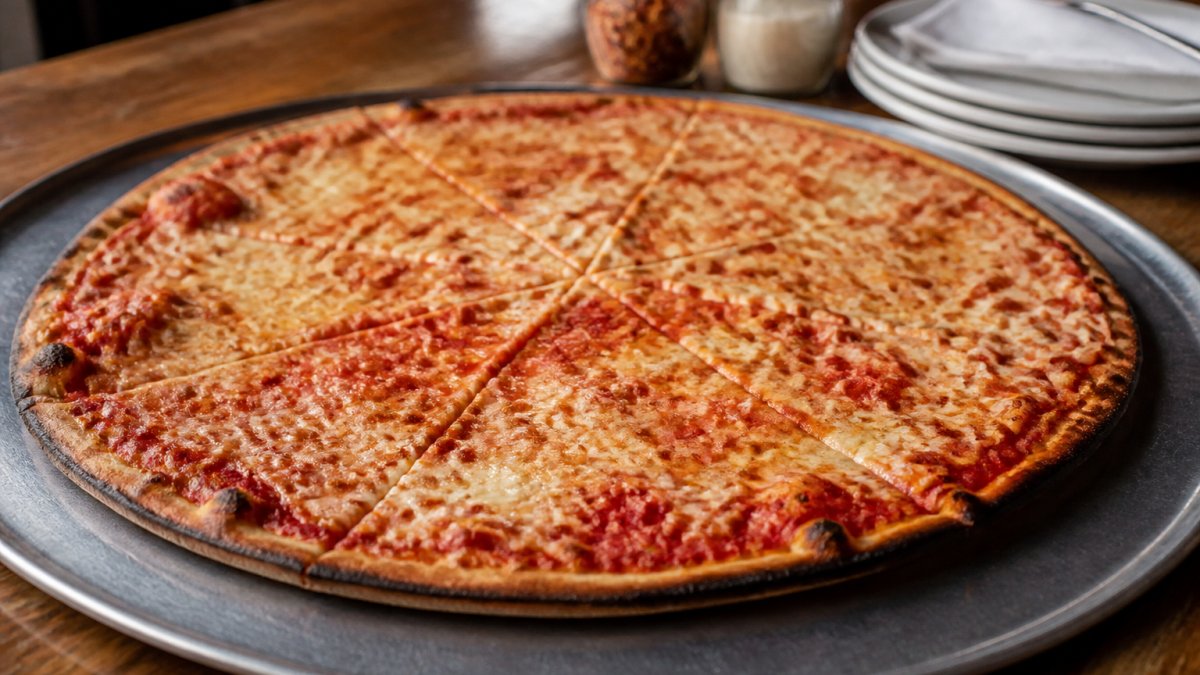
- Crispy, charred edges with slight browning on the bottom
- Minimal sauce that doesn't saturate the dough
- Cheese that bubbles but doesn't slide off
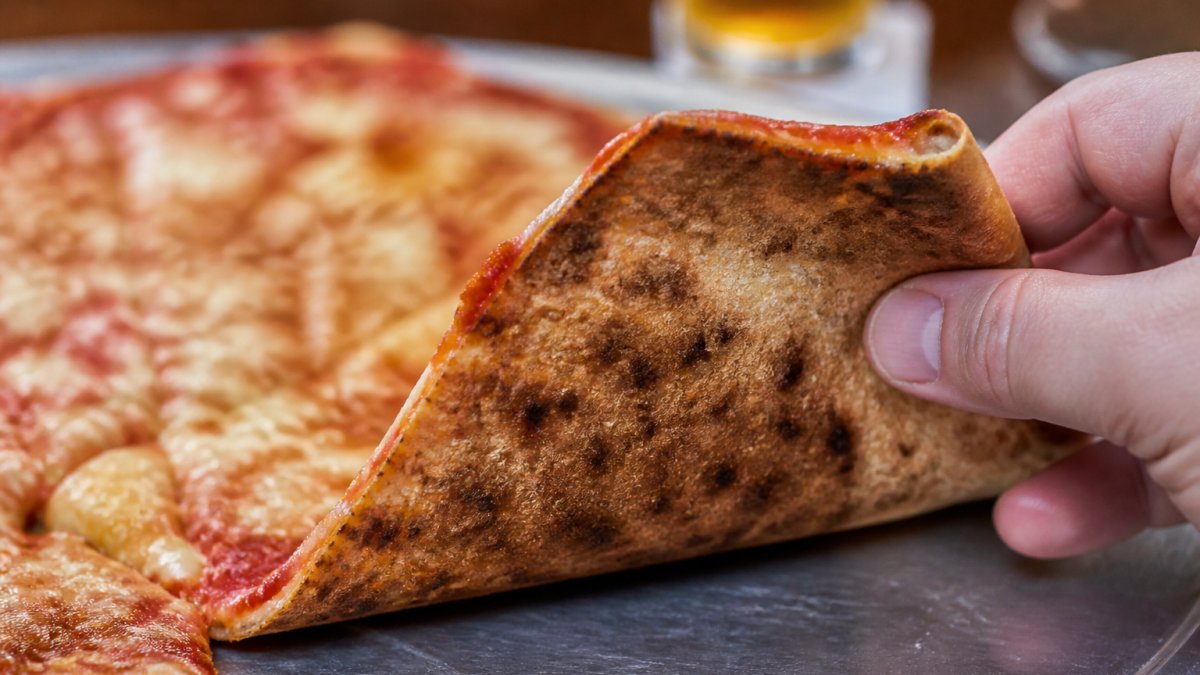
- A crust you can fold without it breaking or drooping
- Visible air pockets in the dough structure
- No grease pooling on top (or minimal amounts)
The crust should bend slightly when you pick up a slice. It shouldn't crack or shatter. It shouldn't feel dense or doughy. When you bite through the surface, you should hear that crisp sound, that's the sound of proper baking and dough development working together.
How thin crust differs from thick and pan pizza
The difference between thin crust, thick crust, and pan pizza is fundamental.
Pan pizza sits in oil or butter, creating a crispy fried bottom while the sides stay soft. The crust is meant to be substantial.
Thin crust is the opposite. Lower hydration dough, high heat, and direct contact with a hot surface create a crust that's crispy throughout.
The baking process is where this distinction matters most. Thin crust needs intense, direct heat.
Thin-Crust Pizza Styles and Regional Variations
Thin-crust pizza isn't monolithic. Regional traditions have shaped distinct styles, each with its own approach to dough, toppings, and baking. Understanding these variations helps you identify what you're looking for and why it matters.
Jersey-style pizza
Jersey-style thin-crust pizza is what most people encounter in the northeastern United States. It's large, typically 18 to 24 inches, cut into eight large rectangular slices.
The defining feature is the crispy, slightly greasy bottom. Jersey-style pizzerias often use a thin layer of oil on the pan or peel, which creates that distinctive fried crust. The cheese bubbles and browns.
Jersey-style is approachable. It's not minimalist. It's meant to be eaten quickly, often standing up or on the go.
New York-style and other regional traditions
New York-style thin crust is leaner than Jersey. The dough is typically lower in fat, the sauce is minimal, and the focus is on the quality of each ingredient.
New Haven-style pizza (apizza) takes thin crust further. The dough is lower hydration, the oven is hotter, and the baking time is shorter.
Other regional styles exist across the country, but these two, Jersey and New York, dominate the thin-crust conversation.
How to Spot Authentic Thin Crust Before You Order
You don't need to taste a pizza to know if it's authentic thin crust. The signs are visible. Before you order or visit, look for these indicators.
What to look for in photos and menus
Start with the menu. Authentic thin-crust pizzerias often list crust type and size. They'll say "thin crust" or "Jersey-style" or "New York-style." They won't be vague.
Look at photos. Real thin-crust pizza has visible characteristics:
- The crust is noticeably thin relative to the toppings
- You can see the bottom of the pizza (not hidden in shadows)
- The bottom shows browning or char
- The cheese is bubbly but not sliding off
- The slice holds its shape when lifted
- There's minimal grease pooling on the surface
If the photos show a thick, fluffy crust or a pizza drowning in sauce, it's not what you're looking for. If the menu doesn't mention crust style, ask or move on.
Questions to ask the restaurant
When you call or visit, ask direct questions:
- "What's your crust thickness?" (Authentic thin crust is typically one-quarter to three-eighths inch)
- "What temperature do you bake at?" (Thin crust needs 700+ degrees Fahrenheit)
- "Do you use a baking stone or steel?" (This affects heat transfer and crust quality)
- "How long does the pizza bake?" (Thin crust bakes fast, usually 2-3 minutes)
- "What's your dough hydration?" (Lower hydration, around 55-60%, produces crispier crust)
Restaurants that know their craft will answer these questions. They'll be specific. They won't be defensive. If the staff can't or won't answer, that's a signal.
Evaluating Crust Quality: Crispness, Crunch, and Chew
Once you have the pizza in front of you, evaluation begins. The crust tells you everything about how the pizza was made.
What to taste and feel when you bite in
Pick up a slice. It should support its own weight without flopping. Fold it slightly.
Bite into the edge. You should hear a crisp sound. The exterior should resist your teeth slightly before giving way.
The flavor should be present. Good thin-crust dough has been fermented long enough to develop flavor.
The bottom should be crispy. If it's soft or soggy, the pizza didn't bake hot enough or long enough.
The top should have some char. Not burnt, but browned.
Signs of authentic baking and heat transfer
Authentic thin-crust pizza shows specific baking signatures:
- Slight charring on the bottom and edges (not black, but brown)
- Bubbles or blisters on the surface where the dough puffed during baking
- Uneven browning (some spots darker than others) rather than uniform color
- Crispy exterior that doesn't soften as it cools
- Minimal grease on the surface (or none, depending on style)
- Cheese that's melted and slightly browned, not pale
These signs indicate the pizza was baked in a hot oven with proper airflow and heat distribution. They indicate the pizzaiolo (pizza maker) knew what they were doing.
If the pizza is uniformly pale, it baked in a cooler oven. If it's soggy or greasy throughout, it didn't get enough direct heat. If it's hard and brittle, it overbaked.
Thin-Crust Pizza Toppings That Work Best
Authentic thin-crust pizza doesn't need many toppings. In fact, restraint is part of the tradition. The crust is the star. Toppings should complement, not dominate.
Classic topping combinations
Jersey-style thin crust traditionally uses simple toppings:
- Pepperoni and cheese (the baseline)
- Sausage and peppers
- Mushrooms and onions
- Plain cheese (to showcase the crust)
- Margherita (sauce, cheese, basil)
New York-style is similarly minimal. The focus is on quality ingredients and balance. A New York slice often has just cheese and sauce, allowing the dough and heat to shine.
New Haven-style (apizza) is even more restrained. Clam pizza is traditional. White pizza with ricotta. Margherita with fresh basil. The toppings are sparse and high-quality.
How toppings affect crust texture and authenticity
Heavy toppings weigh down thin crust. Too much sauce saturates the dough, making it soggy. Too much cheese creates grease.
Authentic thin-crust pizzerias use less sauce than you might expect. A thin, even layer. Cheese is applied sparingly.
This isn't stinginess, it's technique. With thin crust, you want the heat to reach the dough quickly. Heavy toppings slow that process.
When you order thin-crust pizza, order it simply. Let the crust speak. If you want loaded toppings, thick-crust or pan pizza is a better choice.
Reading Thin-Crust Pizza Reviews to Find Local Options
Online reviews reveal patterns. Knowing what to look for helps you separate authentic from average.
What reviewers actually mean by 'crispy' and 'authentic'
When reviewers say "crispy," they mean the crust has a crisp exterior that doesn't soften immediately. It holds up to folding. It doesn't get soggy in your hand.
When they say "authentic," they usually mean the pizza follows a regional tradition. Jersey-style. New York-style. Apizza. They mean the pizzaiolo respects the craft.
Look for reviews that mention specific characteristics:
- "The crust is thin and crispy"
- "You can fold it without it flopping"
- "The bottom has a nice char"
- "The crust has real flavor"
- "It's not greasy"
These are signals of proper technique. Reviews that say "fluffy," "soft," or "bread-like" indicate thick crust or poor execution.
Using photos and detailed feedback to narrow your search
Read reviews that include photos. Look at the pictures. Does the crust look thin? Can you see the bottom? Does it show browning?
Pay attention to reviewers who mention specific details:
- How the pizza was baked (oven type, temperature)
- Crust thickness and texture
- Sauce-to-cheese ratio
- Whether the crust held up during eating
- Specific toppings and how they worked with the crust
These detailed reviews come from people who know what they're looking for. Their feedback is more reliable than generic praise.
Look for consistency in reviews. If multiple reviewers mention crispy crust, thin dough, and proper browning, you've found an authentic thin-crust pizzeria.
Your Checklist for Ordering Authentic Thin Crust Pizza
Use this checklist before and after you order. It helps you confirm you're getting what you came for.
Before you visit or order online
- Menu clearly lists crust type (thin, Jersey-style, New York-style, apizza)
- Restaurant can answer questions about dough hydration, baking temperature, and baking time
- Photos show thin crust with visible browning on the bottom
- Reviews consistently mention crispy, thin crust
- Restaurant uses a baking stone, steel, or high-temperature oven
- Topping list is simple and focused on quality ingredients
- Sauce and cheese are described as minimal or balanced
After you receive your pizza
- Crust is noticeably thin (one-quarter to three-eighths inch)
- Exterior is crispy and supports the pizza's weight
- Bottom shows browning or light char
- Crust bends without cracking or flopping
- You hear a crisp sound when you bite the edge
- Interior has chew and structure, not mushy or dense
- Toppings are balanced, not overwhelming
- No excessive grease pooling on the surface
- Flavor is present in the crust itself
If your pizza checks most of these boxes, you've found authentic thin-crust pizza.
Finding authentic thin-crust pizza comes down to knowing what to look for and asking the right questions. The crust tells the story, whether it was made with care, baked at proper temperature, and treated as the foundation of the pizza rather than a vehicle for toppings. Order now and experience authentic thin-crust pizza paired with our rotating selection of draft beers.
Frequently Asked Questions
How can I tell if thin-crust pizza is authentic before ordering?
Authentic thin-crust pizza has a visible char or slight browning on the edges, a crispy exterior that bends slightly without breaking, and a thin, even dough base. Check the restaurant's menu photos for these signs. Ask whether they use a baking stone or steel and what their oven temperature is. Regional styles like Jersey-style should be visibly thin and foldable, while maintaining structure. Reviews mentioning 'crispy,' 'charred edges,' and 'proper char' are strong indicators of authenticity.
What are the best thin-crust pizza styles to look for?
Jersey-style thin-crust pizza is known for its 24-inch size, foldable slices, and crispy-yet-chewy texture. New York-style offers a thin, hand-tossed crust with a slight char. Each style prioritizes thin dough, proper heat transfer, and minimal toppings so the crust remains the star. Choose based on your preference for chew versus crunch.
What toppings work best on thin-crust pizza?
Thin-crust pizza shines with minimal, quality toppings: fresh mozzarella, basil, olive oil, and tomato sauce for simplicity, or classic combinations like pepperoni and cheese. Heavy toppings like excessive meat or vegetables can weigh down thin crust and prevent proper crisping. Authentic thin-crust pizzerias often feature ingredient-forward toppings rather than loaded combinations. Fewer toppings allow the crust texture to shine and ensure even baking and proper browning.
How do I find reliable thin-crust pizza restaurants using reviews?
Search for reviews mentioning 'crispy,' 'charred,' 'thin,' or 'foldable' crust. Look at review photos showing the crust's texture and color. Read detailed feedback about crust quality, not just overall ratings. Pay attention to mentions of consistency, authentic pizzerias maintain quality across visits. Check if reviewers discuss the dough's chew and crunch balance. Avoid reviews that only mention toppings; focus on those that describe the crust itself. Local pizza enthusiast groups often provide the most detailed, reliable assessments.