 how-to
What Defines Jersey Style Pizza Crust?
Last Updated: November 5, 2026
Quick Summary
A jersey style pizza crust is a thin, round crust that is crisp on the bottom and slightly chewy in the middle. It is typically stretched by hand and baked at high heat, giving it a sturdy base that holds sauce and cheese without going soggy.
- Target a 24-inch diameter for a full pie.
- Keep the center thinner than the rim so the edge stays crisp.
- Hand-stretch the dough instead of rolling it with a pin to keep the chew.
- Let cold dough come to room temperature before stretching.
- Preheat a pizza steel or stone for at least 45 minutes.
Table of Contents
- What Jersey Style Pizza Crust Actually Is
- Jersey-Style vs. New York-Style Pizza: Where the Crust Differs
- Measuring a Proper Thin Crust: Thickness, Diameter and Bake
- Jersey-Style Pizza Dough Recipe, Step by Step
- Stretching and Shaping the Dough by Hand
- Troubleshooting Crust Texture: Too Soft, Too Tough or Too Doughy
- Adapting the Method to a Home Oven or Pizza Steel
- Try the Real Thing at Breckenridge Ale House
- Frequently Asked Questions
What Jersey Style Pizza Crust Actually Is
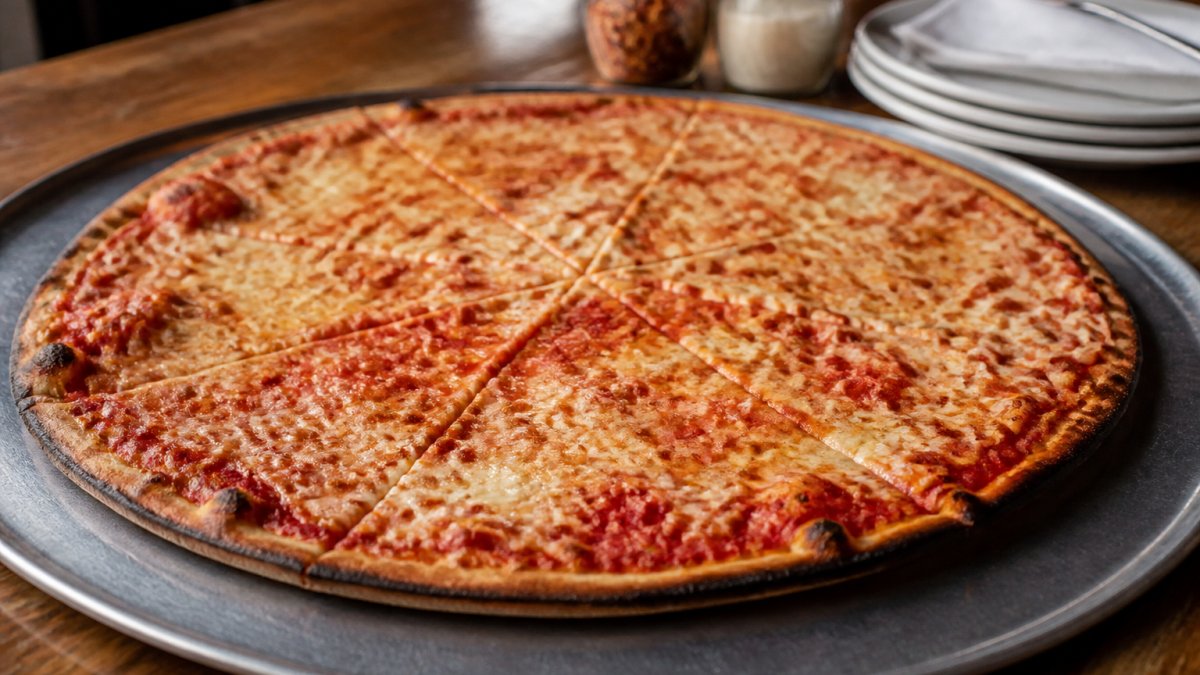
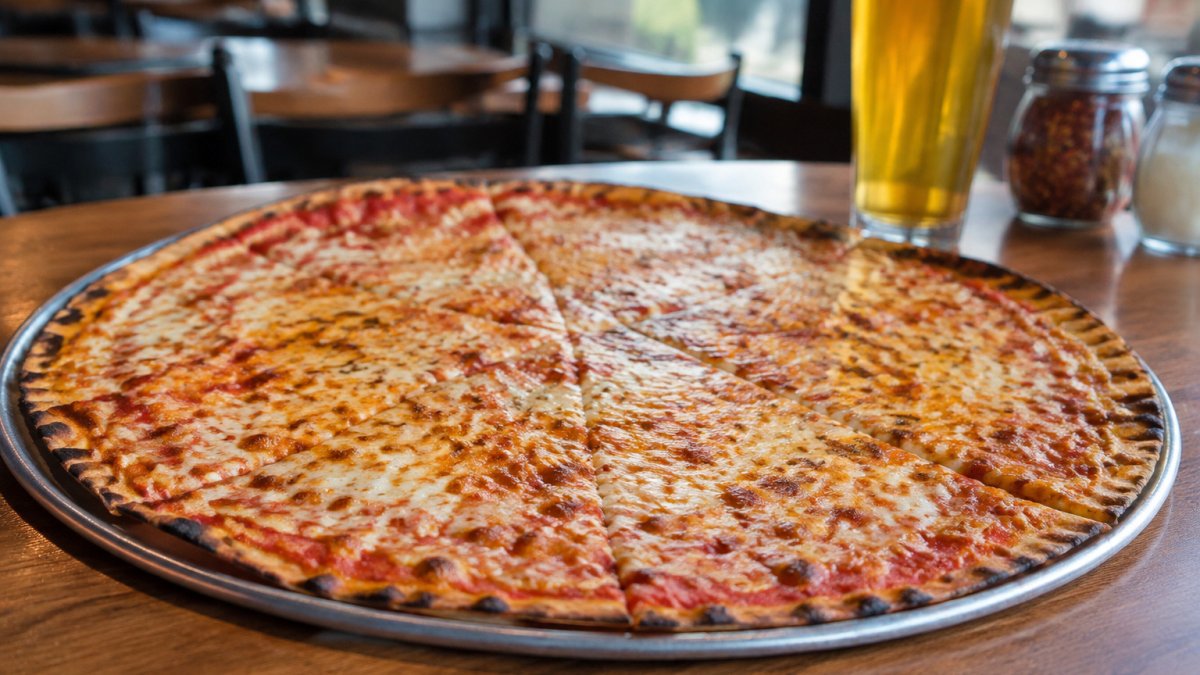
A jersey style pizza crust is a thin, round crust that is crisp on the bottom and slightly chewy in the middle. It is typically stretched by hand and baked at high heat, which gives it a sturdy base that holds up to sauce and cheese without going soggy. This style is commonly served in a 24-inch size, so the crust needs to be stretched wide and kept thin across the entire pie.
Sources describe the texture differently. Some call the crust thin and crispy, while others describe it as thin and chewy or slightly thicker. Because the descriptions vary, the most reliable test is how the slice behaves: it should be foldable, hold its shape, and have a crisp bite at the edge.
Watch out: a crust that looks thin but is rolled with a pin will bake up cracker-like and brittle, not pliable. Hand-stretching keeps the gluten structure that gives the chew.
Jersey-Style vs. New York-Style Pizza: Where the Crust Differs
Jersey-style and New York-style crusts are often confused, but they are not the same. New York-style crust is typically a bit larger, with a foldable slice and a more pronounced rim. Jersey-style crust tends to be thinner across the whole pie, with a crisper bottom and a sturdier base. The difference comes down to how the dough is handled and baked, not to a single secret ingredient. Because dough handling shapes whether a Jersey-style crust bakes up crisp and sturdy, fixing sticky dough can help keep that balance on track.
Here is a quick comparison of the main differences:
| Feature | Jersey-Style | New York-Style |
|---|---|---|
| Typical thickness | Thin across the pie | Thin center, puffier edge |
| Texture | Crisp bottom, chewy middle | Foldable, pliable |
| Sauce | Tangy and generous | Lighter, balanced |
| Best for | Eating with a knife and fork or sharing | Folding and eating by hand |
That is why a Jersey slice holds a straight line when you pick it up, while a New York slice droops and folds.
The labels overlap, and that matters. "Jersey-style" is often used loosely to cover several related traditions, and the crust is the trait they share:
- Thin-crust Jersey pie: the default. Round, hand-stretched, crisp bottom, modest rim, tangy tomato sauce and mozzarella.
- Trenton tomato pie: a thin, sturdy crust where the sauce goes on top of the cheese, often with a sharper, more concentrated tomato flavor. The crust is closer to a cracker at the edge but still chewy under the sauce.
- Boardwalk-style pizza: a thin, often rectangular or large-round pie built for walking and eating by the slice. The crust is crisp and firm enough to hold with one hand, and the sauce is usually applied sparingly.
What these three share is the thin, hand-stretched base and a bottom that crisps before the center turns doughy. You can use our guide to finding authentic thin crust to recognize these traits when ordering out. What separates them is sauce placement, pie shape, and how far the crust is baked. If you are comparing a Jersey-style pie to a New York-style pie, compare the bottom color and the rim height first, those two cues tell you more than the label on the menu.
We recommend trying both styles side by side if you want to taste the difference for yourself. Order one of each, let them cool for two minutes, then pick up a slice from the center of the pie. The Jersey slice should stay flat and crisp; the New York slice should fold.
Measuring a Proper Thin Crust: Thickness, Diameter and Bake
Measuring is the easiest way to get a consistent crust, and it is where most home attempts drift. Start with a 24-inch target diameter. Keep the dough thin enough to see slight color through the center when you hold it up to light.
Aim for these measurements:
- Diameter: about 24 inches for a full pie
- Edge thickness: slightly thicker than the center, but still thin
- Bake time: until the bottom is golden and the cheese is bubbling
Weigh your dough before stretching. A consistent ball weight makes it easier to hit the same diameter every time.
Jersey-Style Pizza Dough Recipe, Step by Step
Here is a simple dough process that suits the Jersey-style crust. It works well for a home oven with a pizza stone or steel.
- Combine all-purpose flour, warm water, instant yeast, olive oil, sugar and kosher salt in a bowl.
- Knead for about 8 to 10 minutes until the dough is smooth and elastic.
- Let it rise in a covered bowl until doubled, usually about 1 to 2 hours.
- Divide the dough into balls sized for your pan or steel.
- Refrigerate overnight for better flavor and easier stretching.
Let the dough come to room temperature before stretching. Cold dough shrinks back and is hard to shape.
Stretching and Shaping the Dough by Hand
Hand-stretching is the key to the right texture. Dust the counter with flour, press the dough from the center outward, and work around the edges. Lift the dough and let gravity do some of the stretching.
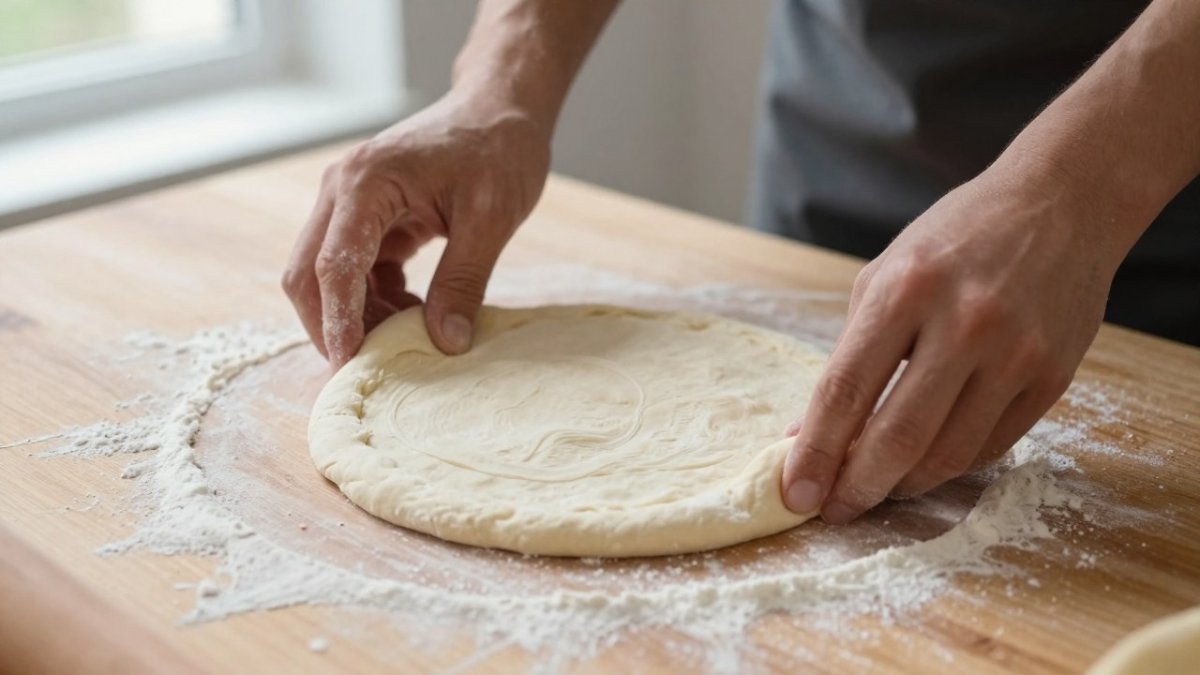
Keep the center thinner than the rim. A small lip at the edge gives the crust its structure and helps it stay crisp outside while remaining chewy inside.
A common mistake is overworking the dough, which tears it and makes the center too thin. If the dough resists, let it rest for 5 minutes and try again.
Troubleshooting Crust Texture: Too Soft, Too Tough or Too Doughy
Most crust problems come down to a few causes:
- Too soft or soggy: The oven is not hot enough, or the sauce is too wet. Preheat longer and use less sauce.
- Too tough or cracker-like: The dough was rolled too thin or overworked. Stretch by hand and let it rest.
- Too doughy in the center: The dough was too thick or underbaked. Stretch it thinner and bake a few minutes longer.
Watch out: adding too much topping adds moisture and weighs the crust down. Keep toppings modest so the base can crisp.
Adapting the Method to a Home Oven or Pizza Steel
A home oven can get close to the results of a commercial oven if you preheat it well. Set your oven to its highest temperature and let a pizza steel or stone heat for at least 45 minutes before baking.
If your oven runs cooler, bake the pizza a few minutes longer and check the bottom for a golden color. A pizza steel conducts heat faster than a stone, which helps the bottom crisp more quickly.
Try the Real Thing at Breckenridge Ale House
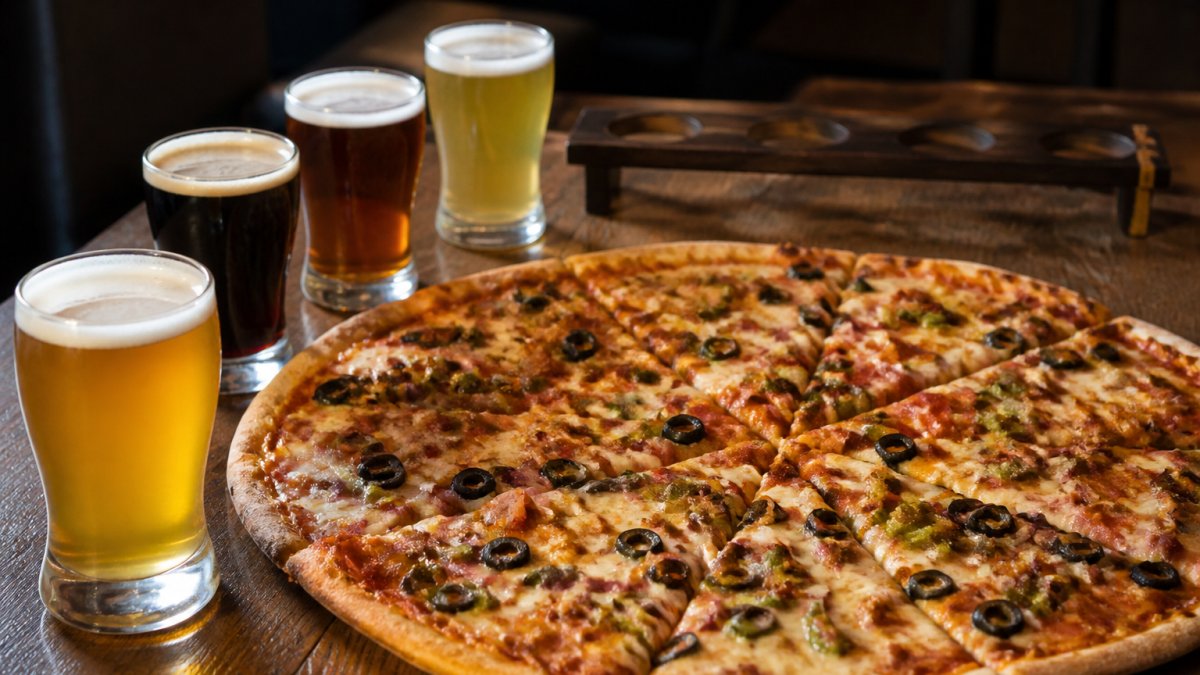
Reading about the crust is one thing, but tasting it is another. Breckenridge Ale House serves 24-inch Jersey-style thin-crust pizzas made to order, paired with a rotating lineup of draft beers and 13 TVs for watching the game. Check out our menu to see what is available, or learn more about us on our restaurant page. If you are planning a visit, you can also read our guide to finding authentic thin crust pizza in Breckenridge.
We deliver daily from 4pm to close, so you can order online and enjoy it at home. Order now and see how the crust compares to the versions you have made yourself.
Frequently Asked Questions
What is Jersey-style pizza?
Jersey-style pizza is a thin-crust pie, usually sold in round form and often associated with New Jersey pizzerias. The crust is thin and crisp on the bottom with a tender, pliable center that folds without tearing. Toppings and sauce are typically applied in moderate amounts so the base stays sturdy. Many New Jersey shops use a hand-tossed dough baked at high heat, which gives the crust its characteristic balance of crispness and chew.
How thin should Jersey-style pizza crust be?
A well-made Jersey-style crust is thin enough to bake crisp on the bottom but thick enough to hold sauce, cheese and toppings without going limp. Home cooks typically aim for a round stretched to roughly 12 to 14 inches for a standard pie, with the center noticeably thinner than the outer edge. If the center feels spongy when pressed after baking, the dough was likely stretched too thick or the oven was not hot enough.
How is Jersey-style pizza crust different from New York-style crust?
New York-style crust is typically larger, with a foldable slice, a slightly chewier interior and a thin but more substantial edge. Jersey-style crust tends to be thinner overall and crisper through the center, with a more tender bite. Sources do not agree on one exact profile for either style, so the differences are best understood as general tendencies rather than strict rules.
Is Jersey-style pizza dough hard to make at home?
The dough is straightforward: flour, warm water, a small amount of yeast, olive oil and salt, mixed, rested and then stretched by hand. The main challenge is handling it gently so it stays thin without tearing. Allowing the dough to rest before stretching makes it far easier to shape, and a very hot oven or baking steel helps produce the crisp base that defines the style.